
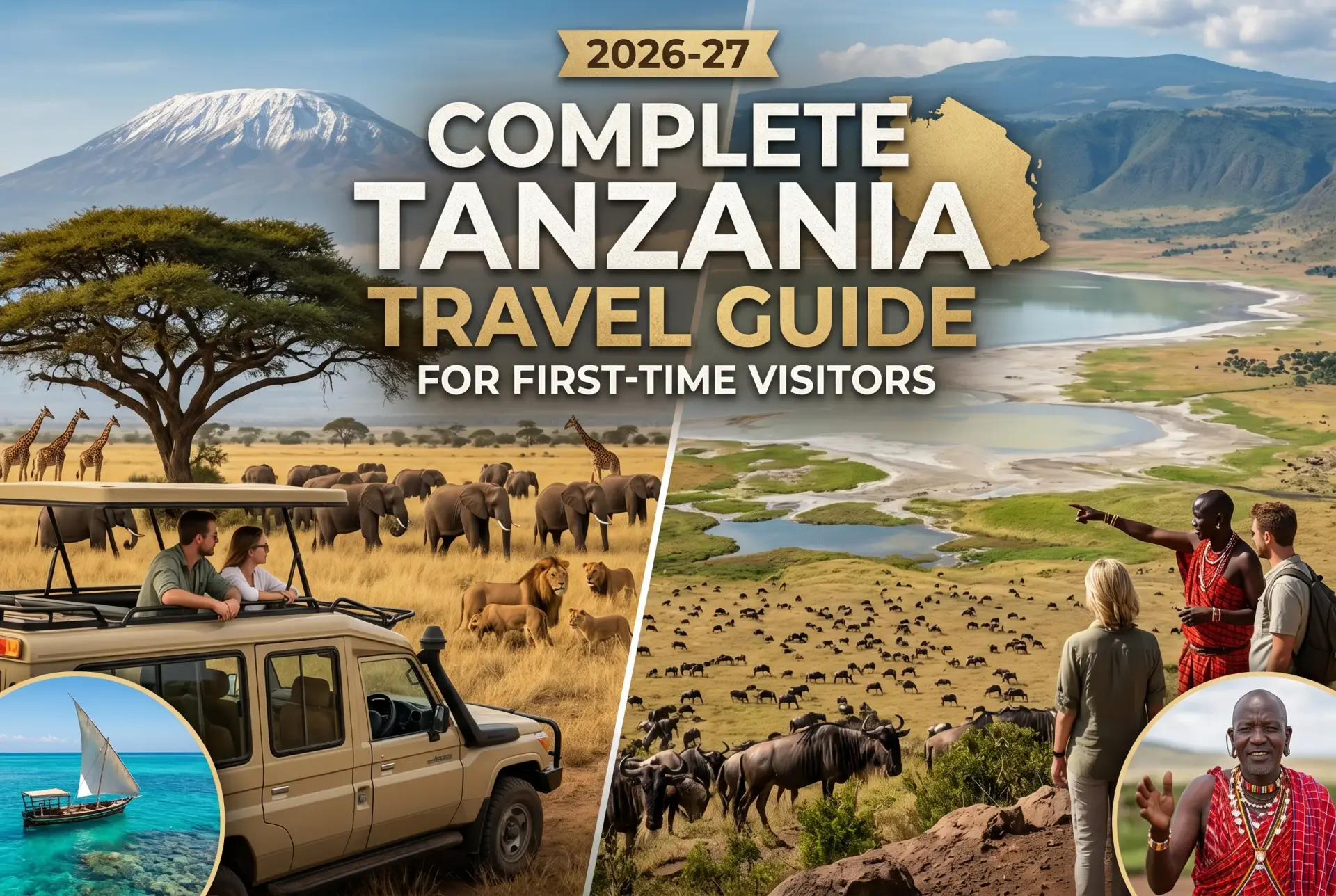
If you have never been to Africa and you are trying to decide where to go first, stop deliberating. Go to Tanzania. No other country on the continent — and arguably no other country in the world — packs this much natural, cultural, and geographic diversity into a single destination. In Tanzania, you can climb the highest freestanding mountain on earth, witness the largest wildlife migration ever recorded, descend into an ancient volcanic caldera filled with the Big Five, and fall asleep listening to the Indian Ocean from a beachfront villa on an island that has barely changed in five hundred years.
Tanzania is safe, welcoming, and increasingly well set up for international visitors of all travel styles and budgets. Whether you are a first-time safari traveler, an adventurous trekker, a honeymooner, a family, or a solo explorer, Tanzania has an experience calibrated perfectly to what you are looking for.
This complete guide covers everything you need to know before your first visit — from visa requirements and health preparation to the best time to go, where to stay, what to budget, and how to plan an itinerary that makes the most of everything this extraordinary country offers.
Official name: United Republic of Tanzania
Capital: Dodoma (political); Dar es Salaam (commercial and transport hub)
Population: Approximately 65 million (2026)
Official languages: Swahili (Kiswahili) and English — both widely spoken
Currency: Tanzanian Shilling (TZS). US dollars are widely accepted in the tourism industry.
Time zone: East Africa Time (EAT) — UTC+3. No daylight saving time.
Electricity: 220-240V, 50Hz. Type G plugs (British standard). Bring a universal adapter.
International airports: Kilimanjaro International (JRO), Julius Nyerere International Dar es Salaam (DAR), Abeid Amani Karume International Zanzibar (ZNZ)
Emergency contacts: 112 (national emergency); +255 22 212 4666 (tourist police Dar es Salaam)


Most international visitors to Tanzania require a visa. The good news is that Tanzania has made the process straightforward for travelers from most countries.
Tanzania’s e-Visa system allows visitors from most countries to apply online before departure at immigration.go.tz. Applications typically take 10 business days to process and cost USD 50 for most nationalities. You receive an electronic visa to print or display on your device on arrival. This is the strongly recommended route for all visitors as it avoids airport queues and processing delays.
Visitors from many countries can also obtain a visa on arrival at Kilimanjaro, Dar es Salaam, and Zanzibar international airports. The cost is USD 50 for most nationalities, payable in cash in US dollars. Queues can be very long during peak season, so the e-Visa is strongly preferred for all travelers.
Citizens of several African Union member states and some Commonwealth countries can enter Tanzania visa-free. Always check the current status for your specific nationality before travel, as policies change periodically. The official source is immigration. go.tz.
Tanzania is a malaria-risk country throughout, including in Zanzibar and all coastal areas. Health preparation is essential for all visitors — not optional.
Yellow Fever: Required only if arriving from a yellow fever-endemic country. Carry your international vaccination certificate (yellow card) as proof of vaccination.
Start your antimalarial medication before departure as directed by your doctor. Use DEET-based insect repellent every evening from dusk. Sleep under a mosquito net where provided. Wear long sleeves and trousers at dawn and dusk when mosquitoes are most active. Most reputable lodges and camps provide nets and mosquito coils as standard—Simbamwene Tours ensures all accommodation on our itineraries meets this requirement.
Tanzania has two main dry seasons and two rainy seasons. The ideal time to visit depends on what you most want to experience.
June to October (Long Dry Season): The best all-round time to visit Tanzania. Wildlife concentrates around water sources, grass is low, and animals are easy to spot. Serengeti river crossings peak in July-August, and Zanzibar is at its clearest. Book accommodation and tours well in advance for this period.
January to March (Short Dry Season): Excellent for Zanzibar beach holidays and the extraordinary Serengeti calving season in January and February. Some highland areas receive short rains from March.
December (mid-month onward): Zanzibar returns to excellent condition. Festive atmosphere across the island. Higher prices from Christmas through New Year.
April to May (Long Rains): Not recommended for a first visit. Heavy rainfall across much of the country has made some park roads impassable. Lowest prices of the year.
November (Short Rains): Manageable for experienced travelers — mornings are often sunny with afternoon showers. Good value for money.
Tanzania’s northern circuit covers the country’s most famous wildlife destinations and is the ideal starting point for any first visit. It connects Arusha (the safari capital), Tarangire National Park, Lake Manyara National Park, the Serengeti, and the Ngorongoro Crater in a logical, accessible loop that can be completed in 5 to 10 days depending on your pace and interests.
At 5,895 meters, Kilimanjaro is the highest point in Africa and one of the Seven Summits. For first-time visitors with a reasonable fitness level and no technical climbing experience, the Machame Route (7 days) or Marangu Route (6 days) are the standard options. Simbamwene Tours provides certified guides, all required mountain equipment, and full porter support for both routes. The summit success rate on a 7-day Machame Route with proper acclimatization is 85 to 90 percent.
Zanzibar is the perfect ending to any Tanzania itinerary. After the excitement of safari or the achievement of Kilimanjaro, the island delivers complete relaxation — beautiful beaches, warm turquoise water, extraordinary snorkeling, and the cultural richness of Stone Town. Most first-time visitors spend 4 to 6 days in Zanzibar, which allows time to explore Stone Town, visit the spice farms, go dolphin watching, and settle in at the best beaches.
Dar es Salaam is Tanzania’s largest city and main international gateway. Most visitors spend one night here at most — it is not a primary destination but a convenient transit point. The city has excellent restaurants, a vibrant craft market at Mwenge, and good connections to Zanzibar by fast ferry (2 hours) or flight (25 minutes).
Domestic flights: The most practical way to travel between northern circuit parks, Dar es Salaam, and Zanzibar. Multiple airlines operate daily routes. Simbamwene Tours arranges all domestic flight bookings as part of your package.
4×4 safari vehicle: All game driving is done in a 4×4 vehicle with a pop-up roof for 360-degree viewing. Simbamwene Tours provides private Land Cruisers with professional driver guides for all safari itineraries.
Zanzibar ferry: Fast ferries operate between Dar es Salaam and Zanzibar Stone Town with a journey time of approximately 2 hours. Book in advance during peak season.
Road transfers: Arusha to Moshi (1 hour), Moshi to Kilimanjaro Airport (45 minutes), Arusha to Tarangire (2 hours). All is handled by Simbamwene Tours with comfortable vehicles.
Tanzania caters to a wide range of budgets, from backpackers to ultra-luxury travelers. Here is a realistic breakdown for first-time visitors on a standard mid-range safari and beach trip.
International flights: USD 700 to 1,800 round trip depending on origin and season
Tanzania e-Visa: USD 50 for most nationalities
Daily safari cost (mid-range, all-inclusive): USD 250 to 450 per person per day — includes accommodation, all meals, guide, vehicle, and park fees
Daily Zanzibar cost (mid-range resort): USD 100 to 250 per person per day — includes accommodation and daily breakfast
Kilimanjaro climb (7-day Machame, all-inclusive): USD 2,200 to 3,500 per person, depending on group size
Domestic flights (e.g., Arusha to Zanzibar): USD 120 to 280 one way
Suggested total budget (10-14 day first trip): USD 3,500 to 7,000 or more per person, depending on route and accommodation level
Simbamwene Tours provides fully transparent, itemized quotes for every itinerary with no hidden fees. Contact us for a personalized quote based on your exact travel dates, group size, and preferences.
Tanzania is one of Africa’s safest travel destinations and consistently ranks among the most welcoming countries on the continent for international visitors. The northern safari circuit, Zanzibar, and the Kilimanjaro trekking areas are well-established, professionally managed tourism zones with low crime rates and good infrastructure.
Standard travel precautions apply: do not display expensive equipment unnecessarily in public, use ATMs located inside bank branches or hotel lobbies rather than on the street, book with a registered and reputable tour operator, and follow your guide’s advice at all times in all wildlife areas. Simbamwene Tours provides 24/7 emergency support for all clients throughout their entire Tanzania journey.
Plan Your Perfect First Tanzania Trip with Simbamwene Tours
From Kilimanjaro to the Serengeti to Zanzibar—we plan everything so you simply experience it.
📩 info@simbamwenetours.com | 📞 +255 718 033 646 | simbamwenetours.com
Explore all our packages at simbamwenetours.com—Northern Circuit, Kilimanjaro, Beach Holidays, and Combos
No. English is widely spoken throughout the tourism industry across Tanzania, including by all Simbamwene Tours guides and staff. Learning a few basic Swahili phrases is always appreciated by local people, but it is absolutely not required.
A minimum of 8 to 10 days is recommended to experience both the Northern Circuit safari and Zanzibar. For a more complete experience that also includes Kilimanjaro, allow 14 days. Our 8-Day Northern Circuit Explorer and 14-Day Kilimanjaro, Safari, and Zanzibar Combo are our most popular packages for first-time visitors.
Absolutely. Tanzania is one of the best solo travel destinations in Africa. Solo travelers can join small group safari departures at Simbamwene Tours, which keeps costs lower while still providing a personal and high-quality experience with professional guides.
Tipping is customary and forms a meaningful part of the guide and support staff income in Tanzania. Recommended daily tips: safari driver-guide USD 15-25, camp cook USD 10, general camp staff USD 10-15 USD 5-10, Kilimanjaro lead guide USD 20-25, and Kilimanjaro porters USD 10-15 per day.
Yes. US dollars are widely accepted at safari lodges, hotels, and tour operators throughout Tanzania. Smaller denomination USD bills (ones, fives, tens, and twenties) are most practical for tips and local purchases. Tanzanian Shillings are needed for local markets, roadside vendors, and small independent shops.
For most first-time visitors, we recommend the 8-Day Northern Circuit Explorer covering Tarangire, Lake Manyara, the Serengeti, and Ngorongoro Crater, combined with 5 to 6 nights in Zanzibar. This covers Tanzania's greatest wildlife destinations and its most beautiful island in a perfectly balanced two-week journey. Simbamwene Tours handles every detail from arrival to departure.

Travel Guide Tanzania Travel Budget 2026: How Much Does a Trip to Tanzania Really Cost? Aug 04, 2026 0 Comments…

Travel Guide Tanzania Travel Budget 2026: How Much Does a Trip to Tanzania Really Cost? Jun 27, 2026 0 Comments…
Professional Tour Guide
Authentic Tanzania safari experiences with expert local guides, offering wildlife adventures, cultural tours, and luxury travel across Serengeti, Ngorongoro, and Zanzibar.


WhatsApp us