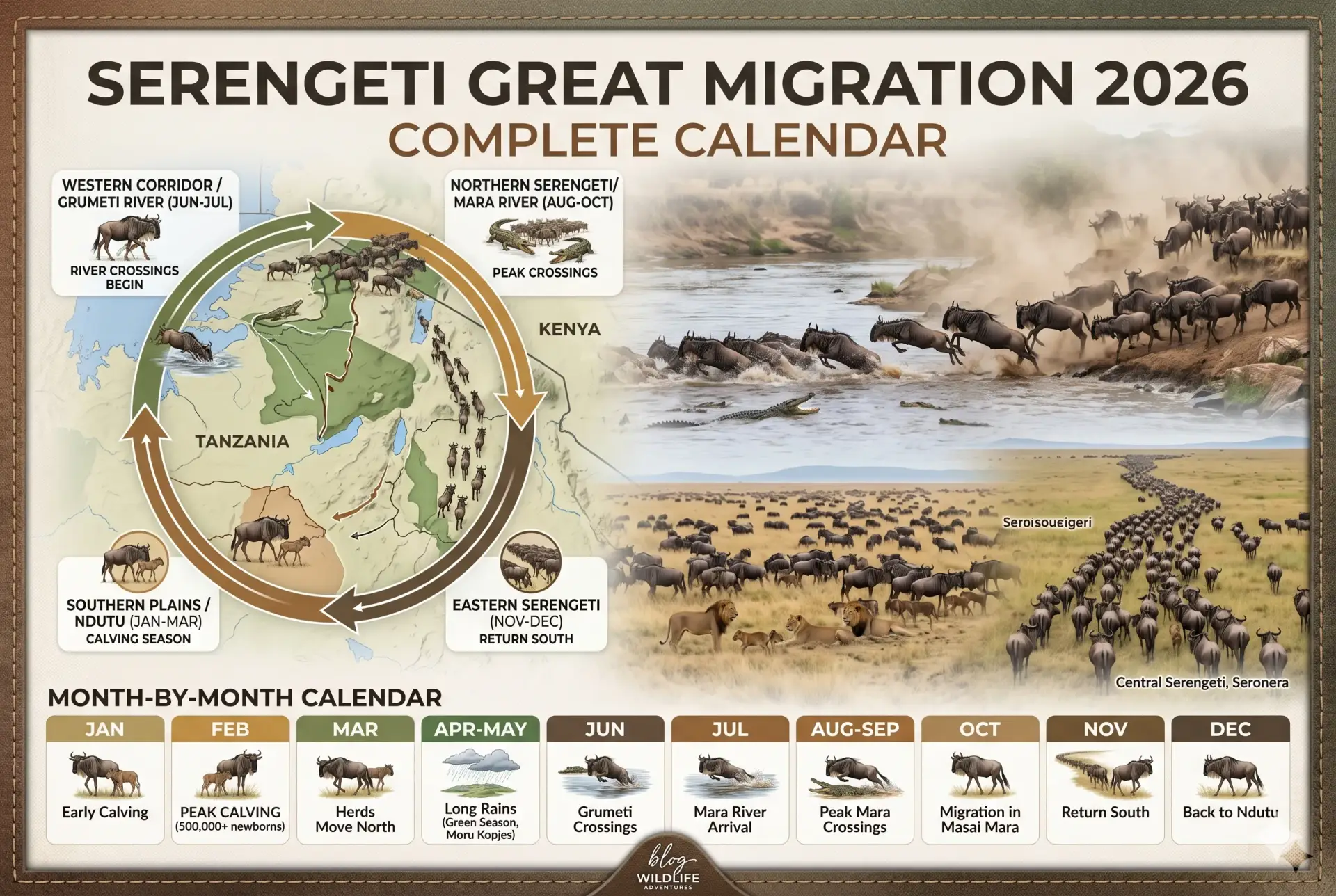
January — Southern Serengeti: Calving Begins
The herds gather in the short-grass plains of the southern Serengeti and the Ndutu area. Calving season begins in earnest. Thousands of wildebeest calves are born daily, drawing cheetahs, lions, leopards, and hyenas to the southern plains in extraordinary numbers. This is one of the best months for predator sightings anywhere in Africa.
Best for: Calving season, Big Cat predator action, photography, fewer crowds
Where to be: Southern Serengeti — Ndutu Plains, Ngorongoro Conservation Area border
February — Peak Calving Season: The Greatest Spectacle
February is arguably the most underrated month in the entire migration calendar. The calving season reaches its peak — up to 8,000 calves are born every day across the southern plains. Predator concentrations are extraordinary, with cheetahs, lions, and wild dogs all taking advantage of the abundance. Visitor numbers are lower than peak season, meaning more exclusive game drives.
Best for: Peak calving, predator density, value pricing, uncrowded parks
Where to be: Ndutu, Southern Serengeti
March — Beginning of the March North
As the rains begin to ease in the south, the herds start their gradual movement northward into the central Serengeti. The landscape is still lush and green. This is a transitional month with good wildlife viewing across multiple zones. Predator activity remains high as the herds are still concentrated.
Best for: Transitional migration viewing, green landscape photography
Where to be: Central Serengeti, Seronera Valley
April — Central Serengeti: Long Rains Begin
The long rains arrive across Tanzania. The herds continue moving north through the central Serengeti. Park roads can become challenging in wet conditions, but the landscape is dramatically beautiful—vivid green against golden light. Visitor numbers drop significantly, offering some of the most exclusive safari experiences of the year at lower prices.
Best for: Budget-conscious travelers, exclusive experiences, dramatic green landscapes
Where to be: Central Serengeti
May — Northern Push Continues
The wildebeest continue their push northward through the Western Corridor. The Grumeti River sees the first river crossings of the year — smaller than the famous Mara crossings but dramatic nonetheless, with large Nile crocodiles waiting in the water. The rains continue but begin to ease toward the end of the month.
Best for: Grumeti River crossings, first river drama of the year
Where to be: Western Corridor, Grumeti Reserve
June — Dry Season Begins: Prime Safari Conditions
One of the best months to visit the Serengeti. The rains end, the landscape dries out, and wildlife concentrates around water sources. The herds begin arriving in the northern Serengeti. Game drives are exceptional with clear skies and excellent visibility. The Mara River crossing season is approaching.
Best for: Excellent all-round safari conditions, approaching river crossings
Where to be: Northern Serengeti, Kogatende area
July — The Famous Mara River Crossings Begin
This is what many wildlife lovers travel specifically to see. The wildebeest begin their crossings of the Mara River in a dramatic, often chaotic fashion—thousands of animals plunging into crocodile-filled waters, driven by instinct and the pull of fresh grazing on the other side. Crossings are unpredictable in timing but can happen multiple times a day. July marks the beginning of peak safari season.
Best for: Mara River crossings, peak wildlife drama, Big Cat sightings
Where to be: Northern Serengeti — Kogatende, Lamai Wedge
August — Peak River Crossing Season
August is peak season in every sense. The river crossings are at their most frequent and dramatic. The northern Serengeti is alive with wildebeest, predators, and the raw drama of survival. Book accommodation well in advance — this is the most sought-after month in the entire safari calendar. Game viewing across the whole park is exceptional.
Best for: Maximum river crossing frequency, peak wildlife activity
Where to be: Northern Serengeti — Kogatende, Mara Triangle
September — Crossings Continue, Excellent All-Round Viewing
River crossings continue through September as herds move back and forth across the Mara. Predator sightings remain outstanding. The weather is perfect — clear, dry, and cool. This is an excellent alternative to August with slightly lower visitor numbers while still offering the full river crossing experience.
Best for: River crossings with marginally fewer crowds than August
Where to be: Northern Serengeti
October — The Return South Begins
The short rains begin to arrive in the southern Serengeti, and the herds begin their return journey south. Crossings become less frequent. This is a transitional month with excellent wildlife viewing across the central and southern zones as the migration splits and spreads. Big Cats remain very active.
Best for: Southward migration, diverse wildlife, transitional season beauty
Where to be: Central Serengeti, Seronera
November — Southern Return and Short Rains
The herds move steadily back toward the southern Serengeti and Ndutu. Short rains freshen the landscape. Visitor numbers drop as the dramatic river crossing season ends. This is an excellent value month with good wildlife, beautiful light for photography, and more exclusive game drives.
Best for: Value travel, photography, southern return movement
Where to be: Southern and Central Serengeti
December — Back to the South: The Cycle Completes
The herds return fully to the southern Serengeti and Ndutu plains, where they will remain for the calving season that begins in January. Wildlife viewing is excellent. The landscape is lush and green after the rains. Visitor numbers are moderate, with a slight increase over the festive season. The cycle begins again – and is never less than extraordinary.
Best for: Pre-calving positioning, green season photography, festive travel
Where to be: Southern Serengeti, Ndutu